
Contents
Flooded homes can experience water damage that affects the structure if not addressed promptly. To effectively assess this damage, you’ll need to adopt a systematic approach that prioritizes safety and thorough evaluation. This involves understanding the extent of the water intrusion and identifying potential hazards. Knowing where to start can make all the difference in ensuring a safe and accurate assessment.
Key Takeaways
- Conduct a thorough inspection for visible signs of water damage, such as discoloration, warping, and mold growth on surfaces.
- Use a moisture meter to detect hidden moisture levels in walls, ceilings, and floors for accurate assessment.
- Evaluate structural integrity by inspecting load-bearing walls, foundation stability, and roof conditions for potential hazards.
- Document all findings with detailed photos and notes, including damaged items and their estimated values for insurance claims.
- Prioritize safety by wearing protective gear and avoiding contact with standing water, especially near electrical outlets.
Understanding the Extent of Water Damage
How do you determine the extent of water damage in your home? Start with a thorough water damage assessment. Identify the affected areas by looking for discoloration, warping, or mold growth. Check walls, ceilings, and floors, as these are typically the most vulnerable.
Next, evaluate the damage severity by measuring moisture levels with a moisture meter. This tool will help you pinpoint hidden water intrusion that’s not visible to the naked eye. Assess whether the damage is mild, moderate, or severe, as this will guide your next steps.
In addition to physical inspection, consider the source and duration of the water exposure. A rapid response often mitigates further damage, so act quickly.
Document your findings with photos and notes to support any insurance claims. Understanding the extent of water damage aids repair decisions and fosters a sense of community, as sharing experiences can help others facing similar challenges.
Safety Precautions Before Assessment
Before you begin evaluating water damage, it’s crucial to prioritize safety to protect yourself from potential hazards. Start by wearing personal protective equipment, including gloves, masks, and waterproof boots. These items safeguard you against contaminants and pathogens that may lurk in floodwater.
Next, make sure you’ve prepared an emergency kit, stocked with essentials like flashlights, batteries, first-aid supplies, and non-perishable food. This kit will keep you equipped in case of sudden emergencies during your assessment.
Always check for structural damage before entering a flooded area; look for sagging ceilings or walls, which could pose additional risks.
Additionally, be cautious of electrical hazards—never enter standing water if outlets are submerged.
Identifying Affected Areas and Materials
To effectively identify affected areas and materials, start by evaluating visible water damage, which can include stains, warping, or discoloration on walls and ceilings.
Next, utilize moisture detection tools to uncover hidden moisture within materials that may not exhibit immediate signs of damage.
This systematic approach ensures accurate evaluation and helps prioritize remediation efforts.
Visible Water Damage
Visible water damage often manifests in distinct patterns that reveal the extent of the problem. Identifying these visible signs is essential for effective remediation.
Look for the following key indicators:
- Water stains on walls and ceilings are often yellow or brown.
- Bubbling or peeling paint indicates trapped moisture beneath the surface.
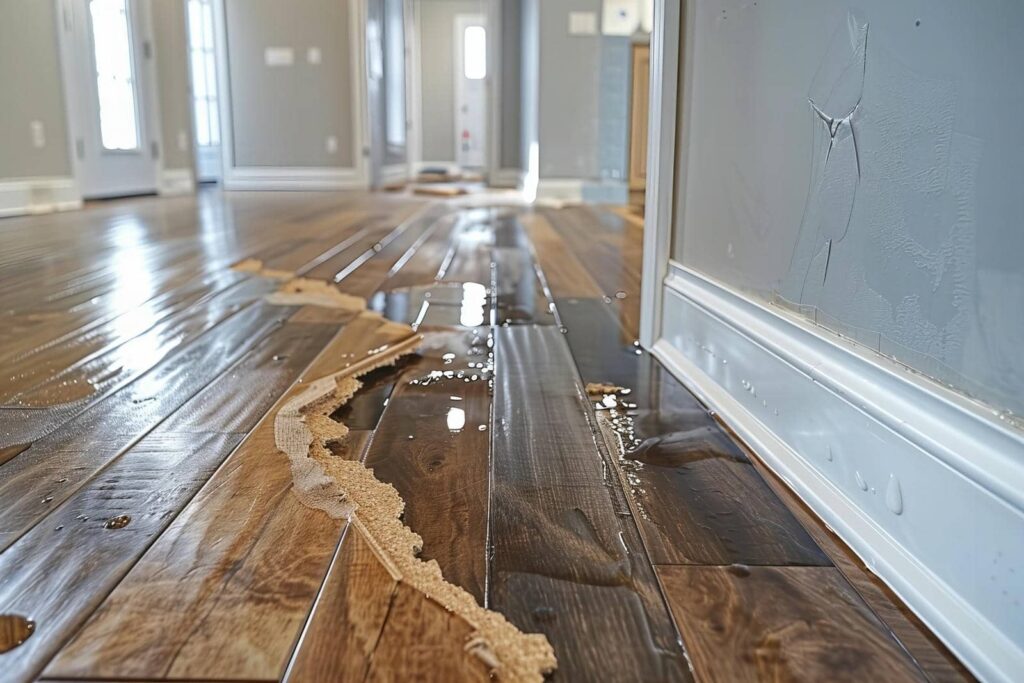
- Warped or buckled flooring, which signals prolonged exposure to water.
- Mold growth in damp areas is a clear sign of water intrusion.
Hidden Moisture Detection
Identifying hidden moisture is essential for a thorough assessment of water damage, as it can often lurk beneath surfaces, causing long-term issues. You’ll want to utilize moisture meters to pinpoint areas with elevated moisture levels, ensuring you don’t miss any affected materials.
These devices can measure moisture levels in walls, floors, and ceilings, providing accurate readings that guide your remediation efforts.
Additionally, consider employing thermal imaging technology. This method detects temperature variations that indicate moisture presence, allowing you to visualize the problem areas without invasive probing.
Evaluating Structural Integrity
When evaluating water damage, you must evaluate the structural integrity of your property by inspecting load-bearing walls for signs of warping or cracks.
Next, check the foundation stability to ensure there’s no shifting or settling that could compromise safety.
Finally, evaluate the roof condition, as water intrusion can weaken materials and lead to further structural failure.
Inspect Load-Bearing Walls
Although water damage often manifests in obvious ways, it’s essential to inspect load-bearing walls to ensure the overall structural integrity of your property.
Neglecting these assessments could lead to severe consequences. Here are key factors to evaluate:
Cracks: Look for noticeable fissures that may indicate stress on the wall.
Sagging: Check for any visual sagging or bowing that disrupts wall integrity.
Moisture Signs: Observe for damp spots or discoloration, as these can weaken the structure.
Fasteners: Inspect nails or screws for rust, which may compromise load-bearing capabilities.
Check Foundation Stability
Foundation stability is essential for maintaining the structural integrity of your property, and evaluating it involves examining several key indicators.
Start by inspecting for foundation cracks, as these may signal underlying issues. Horizontal or vertical cracks can indicate distress, requiring immediate attention.
Next, assess the surrounding landscape for signs of soil erosion. If soil has washed away, it can undermine your foundation, leading to further damage.
Look for uneven settling or changes in your property’s elevation, which could reflect compromised stability.
Don’t overlook any dampness or water pooling around the foundation, as this can exacerbate erosion.
Assess Roof Condition
To effectively evaluate your roof’s condition, it’s essential to conduct a thorough inspection, as this can reveal potential structural issues that may lead to water damage.
Start by looking for signs of roof leaks and water stains, as they can indicate hidden problems. Pay attention to the following:
Visible Cracks: Inspect for any cracks in the roofing material, which could allow water intrusion.
Sagging Areas: Look for sagging sections that may indicate structural weakness.
Damaged Flashing: Check the flashing around chimneys and vents; damaged flashing can cause leaks.
Mold Growth: Identify any mold or mildew, as these can thrive in damp conditions, signaling deeper issues.
Address these concerns promptly to protect your home and ensure a safe living environment.
Checking for Mold and Mildew Growth
As you assess water damage, checking for mold and mildew growth is essential because these fungi can proliferate rapidly in damp environments.
Start by inspecting areas affected by water, focusing on dark, hidden spots like under sinks, behind walls, and in corners. Look for discoloration, a musty smell, or visible mold growth, which can appear as black, green, or white patches.
Use a moisture meter to gauge humidity levels; anything above 60% can encourage mold development.
For mildew prevention, ensure proper ventilation and consider using dehumidifiers in consistently damp areas.
If you find extensive mold, it might be best to consult a professional for remediation.
Documenting Damage for Insurance Claims
Documenting water damage effectively is crucial for a successful insurance claim. Without proper documentation, you might face delays or denials during your claim submission.
Here are some essential documentation tips to help you navigate this process:
Take clear photographs of all affected areas—ensure you capture the extent of the damage.
Record the date and time of the flooding event to establish a timeline for your claim.
List damaged items with descriptions, including their purchase dates and estimated values, to support your case.
Keep receipts and invoices for repairs or replacements, as they serve as proof of your losses.
Seeking Professional Help for Restoration
Water damage restoration often requires professional intervention to ensure thorough and effective recovery. When you face significant flooding, seeking professional restoration services is essential.
These experts possess the technical knowledge and tools necessary for complete assessments and remediation. They’ll identify hidden moisture and assess structural integrity, preventing further damage or health risks.
Emergency response teams are trained to act swiftly, minimizing your losses and expediting the restoration process. Their experience allows them to develop tailored strategies that address specific situations, whether it’s water extraction, drying, or mold remediation.
Relying on professionals ensures you’re following proper safety protocols and provides peace of mind, fostering a sense of community in your recovery effort.
Frequently Asked Questions
How Long Does It Take for Water Damage to Appear?
Water damage can appear within hours of flooding, depending on materials and conditions. A prompt flood response is essential; understanding the damage timeline helps you gauge severity and prioritize restoration efforts effectively for your home.
Can I Assess Water Damage Without Professional Help?
You can perform a DIY assessment of water damage. Look for damage indicators like discoloration, peeling paint, or mold. However, if the situation feels overwhelming, consulting a professional is wise for a thorough evaluation.
What Should I Do if I Smell Mold?
If you smell mold, use mold identification techniques like visual inspections and moisture detection. Don’t ignore potential health risks; they can affect your well-being. Act quickly to mitigate exposure and prevent further damage in your home.
Are There Any Tools Needed for Assessment?
You’ll need a moisture meter to quantify water levels and an infrared camera to visualize hidden moisture behind walls. These tools help you accurately assess damage, ensuring you address all affected areas effectively and thoroughly.
How Does Weather Influence Water Damage Severity?
When it comes to water damage, weather patterns and rainfall intensity play vital roles. Heavy rainfall can exacerbate flooding, while prolonged wet conditions can worsen damage. You need to monitor these factors closely to assess your situation.
Summary
In evaluating water damage, you prioritize safety, document findings meticulously, and analyze thoroughly. By identifying affected areas, checking structural integrity, and recognizing mold growth, you create an extensive picture of the damage. You ensure detailed records for insurance claims, seek professional help when necessary, and take proactive steps for restoration. Ultimately, by following these steps, you safeguard your health and facilitate a smoother recovery for your flooded home.
Recent Posts
3 Best Emergency Tips for Sewage Backup Cleanup
Sewage backups can release harmful pathogens that pose serious health risks, often underestimated by homeowners.
Why Remediate Mold in Water-Damaged Basements?
If you’ve experienced water damage in your basement, addressing mold growth is essential. Mold can
Steps for Mold Remediation in Flooded Basements
It’s often believed that once a basement floods, mold is an inevitable consequence. However, by